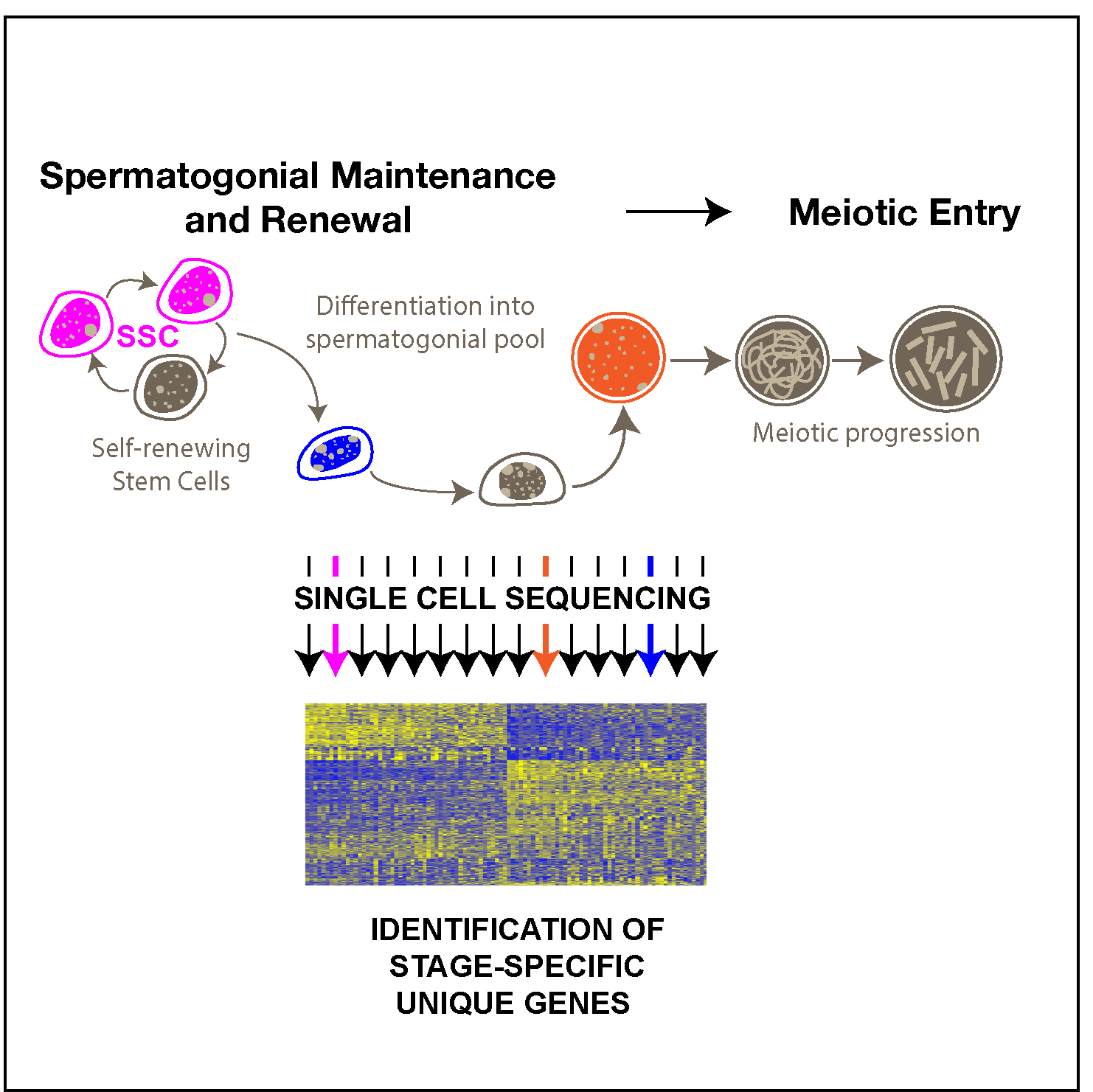


For several years, the Cohen lab has been focused on translating its knowledge of germ cell development towards the development of reversible and safe long-term non-hormonal contraceptives for men and women. Unintended pregnancies account for nearly 44% of all pregnancies worldwide, with most existing contraceptive strategies being largely female-centered or permanent, such as vasectomy. Developing non-hormonal methods that transiently prevent sperm production would help close this gap and promote shared reproductive responsibility. At the same time, we lack safe and well-tolerated options for women. Thus, the Cohen lab has been using several approaches to identify contraceptive targets that could be used safely and reversibly either by men or women to level the playing field in family planning.
On the male side, we are working with the Gates Foundation and the Male Contraceptive Initiative (MCI) to identify suitable probe molecules and targets that could disrupt sperm production in the reversible manner. On the female side, we are using state-of-the-art proteomics approaches to uncover novel ovarian proteins that could be targets for female contraception (funded by the Gates Foundation).